
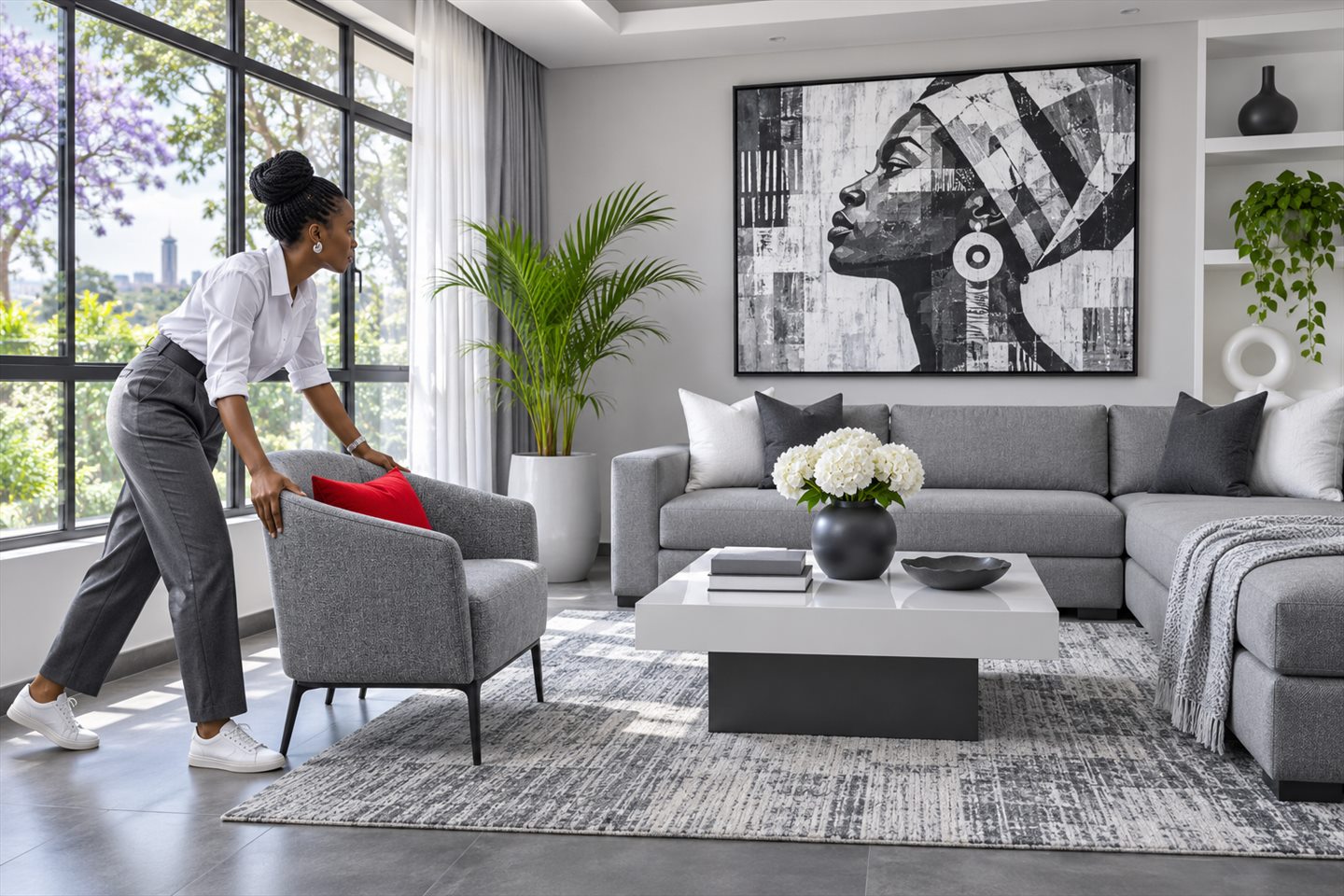
Interior design principles are practical tools for deciding how a room should work and feel. They are not rules that every home must follow. Use them to test whether furniture fits, whether people can move comfortably and whether the parts of a room support one another.
Function comes before decoration
List the activities a room needs to support and plan around them. A living room used for conversation, television, children’s play and occasional work may need flexible seating and storage. A bedroom may need clear routes, bedside lighting and space to open wardrobe doors. Start with these routines before deciding what to buy.
Proportion and scale
Furniture should relate to the room and to nearby pieces. A very large sofa can block movement; several tiny tables can make a generous room feel visually fragmented. Measure the room and the furniture, sketch a layout and leave usable routes. If you are unsure, mark the proposed footprint on the floor before ordering.
Balance, contrast and a focal point
Balance is about how visual weight is distributed. A strong artwork or dark cabinet may be balanced by open space, lighter materials or another element across the room. Contrast helps important features stand out, while repetition of a colour or shape can connect separate areas. Choose one or two focal points rather than competing for attention everywhere.
Harmony through consistent decisions
A home can include different styles and still feel coherent. Repeat selected finishes, colours or forms across rooms, and let each space have a clear purpose. A palette does not have to use the same colour in every room; it can use related tones and materials to create continuity.
Light changes how a scheme reads
Observe natural light at different times of day, then consider general, task and accent lighting. Test paint and textile samples in the actual room rather than relying only on a screen or showroom. Our guide to layered lighting for Nairobi interiors gives more detail.
Apply these principles to your own brief, not to a fixed formula. For a structured overview, read the IDAK interior design guide and explore the professional directory.