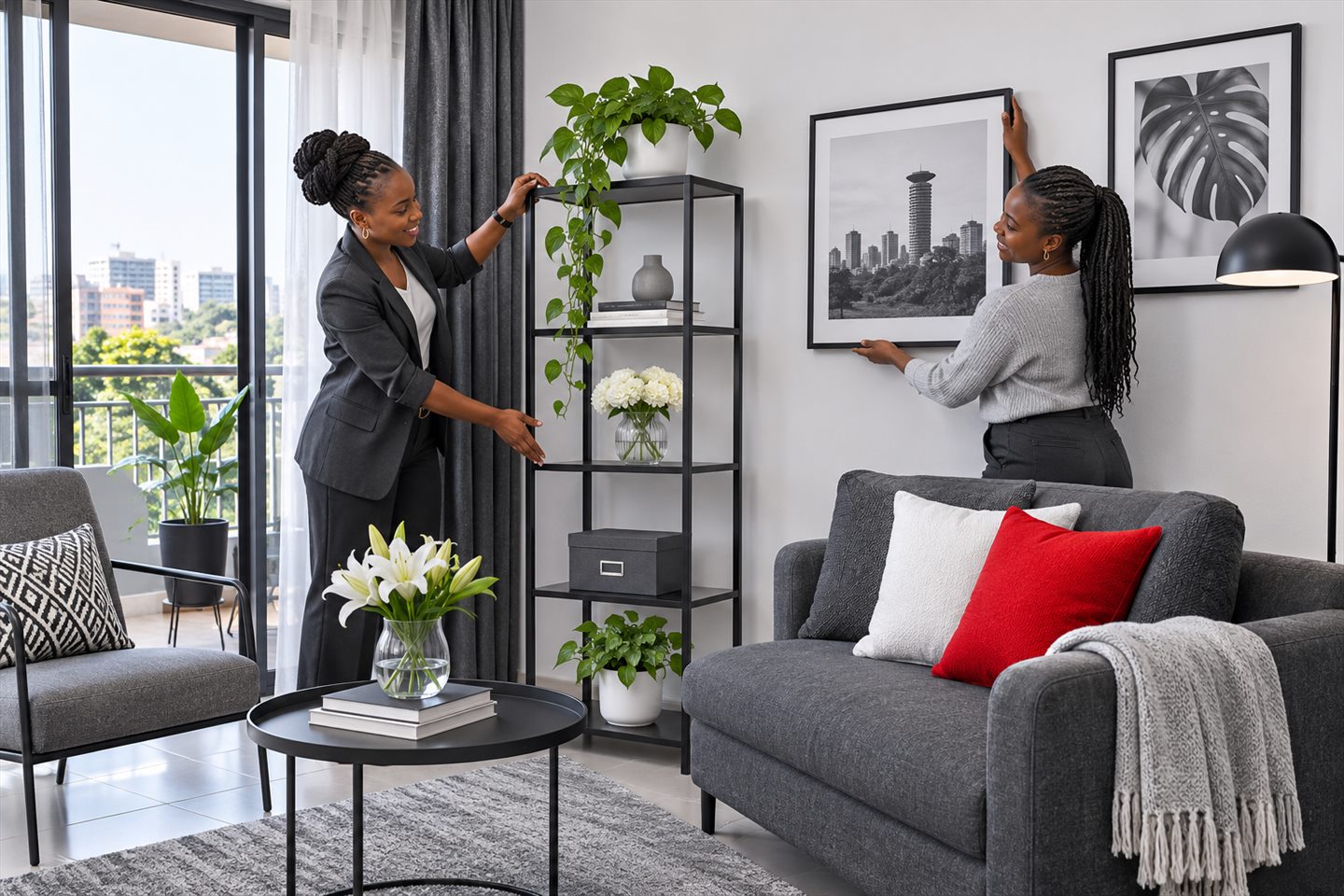

Planning a home in Kenya? Begin with how you live, what you need to store and which parts of the property you want to change. A residential interior designer can help you turn those decisions into a layout and a written plan for the work.
Describe your household’s routines
Tell the designer who uses each room, whether anyone works or studies at home, and what you need to keep accessible. List furniture and appliances you will reuse. For an apartment, ask the property manager about work hours, lift bookings and approvals before planning deliveries or renovation.
Set the scope room by room
Separate fixed work such as kitchen or wardrobe joinery from movable furniture, lighting and soft furnishings. Ask for measured layouts, storage details and finish selections that match the rooms you use most. If the budget is limited, price essential work first and leave optional styling for a later phase.
Choose materials for maintenance
Ask how each surface will be cleaned, repaired or replaced. Review samples in the actual light where possible. If you need electrical, plumbing or structural changes, identify the qualified professional who will check and carry out that work.
Agree how the project will run
Before paying a deposit, confirm drawings, revisions, site visits, procurement, contractor coordination, payment stages and exclusions in writing. Ask how changes will be priced and approved.
For room-by-room ideas, read the Nairobi apartment guide and house interior design guide. You can also review available IDAK profiles and ask about experience that matches your project.