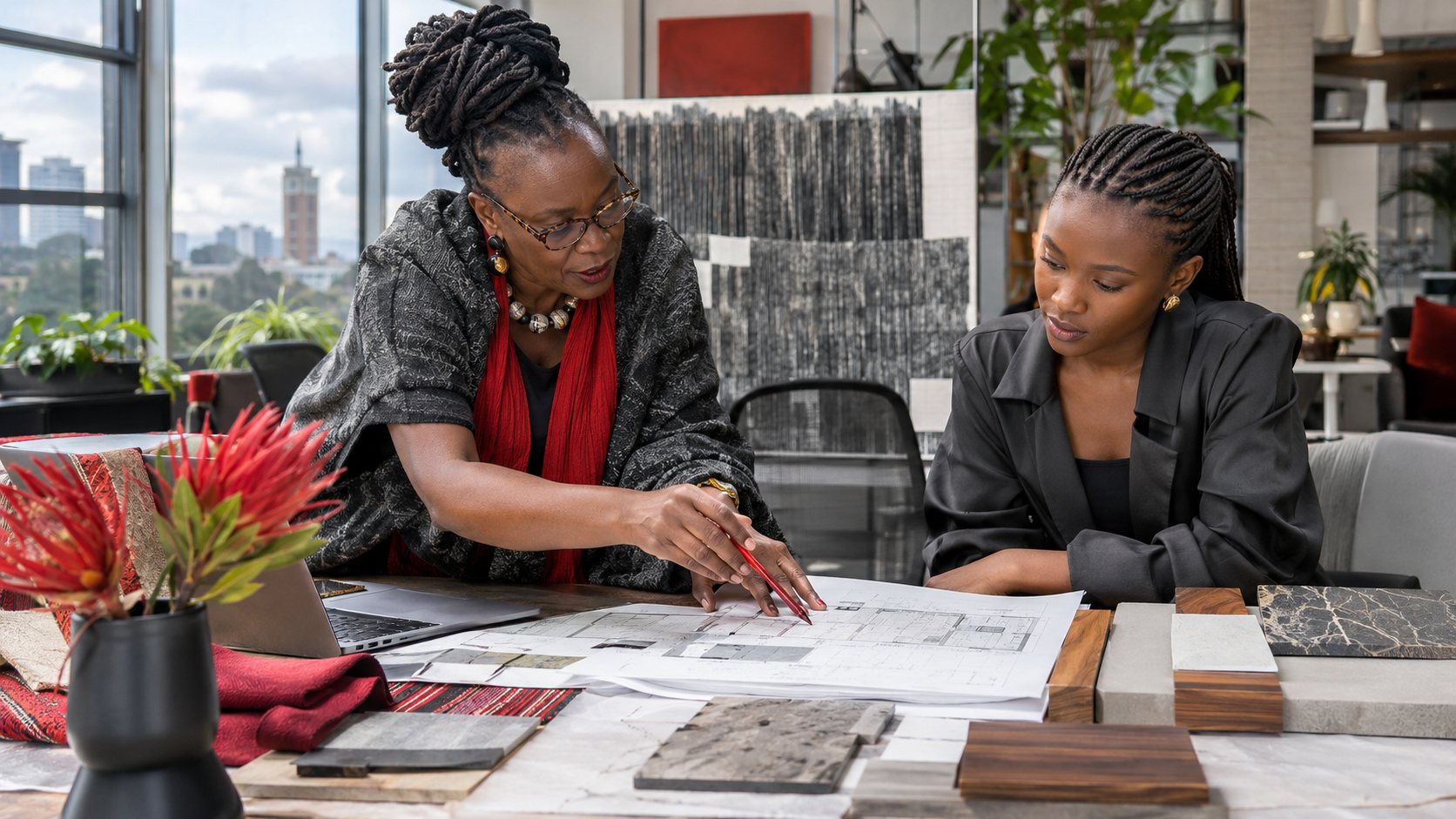

If you’re designing a house in Kenya, bring the current floor plan and construction stage to the first meeting; the right decisions depend on both.
1. Describe everyday routines
Record who uses each room, how you host guests, work or study, and where storage is lacking. Consider privacy, accessibility, cleaning and future changes. Photograph existing conditions and identify furniture or materials you intend to keep.
2. Understand the project stage
If the house is being built, share the current plans and programme with the design team. If it is occupied, agree on a survey and discuss how construction will affect the household. Identify decisions already made and those still open.
3. Coordinate before finishes are final
Before ceilings, lighting points or built-in storage are fixed, ask your designer to coordinate the layouts and joinery with the architect or contractor. Request sample approvals and a written list of decisions needed before each trade starts. Separate design fees from construction, furniture and finishes so you can see what the budget covers.
4. Divide the budget and sequence the work
Separate design fees, professional consultants, construction, furniture and deliveries. Decide which rooms or decisions are essential now and which can wait. Ask for a written scope and a process for approving changes.
5. Choose a designer for your needs
Browse the IDAK designer directory, review the available profiles and discuss relevant house projects. For an overview of design stages, read the interior design process in Kenya.
Related guide: Residential Interior Designers in Nairobi: Plan a Home That Works.