
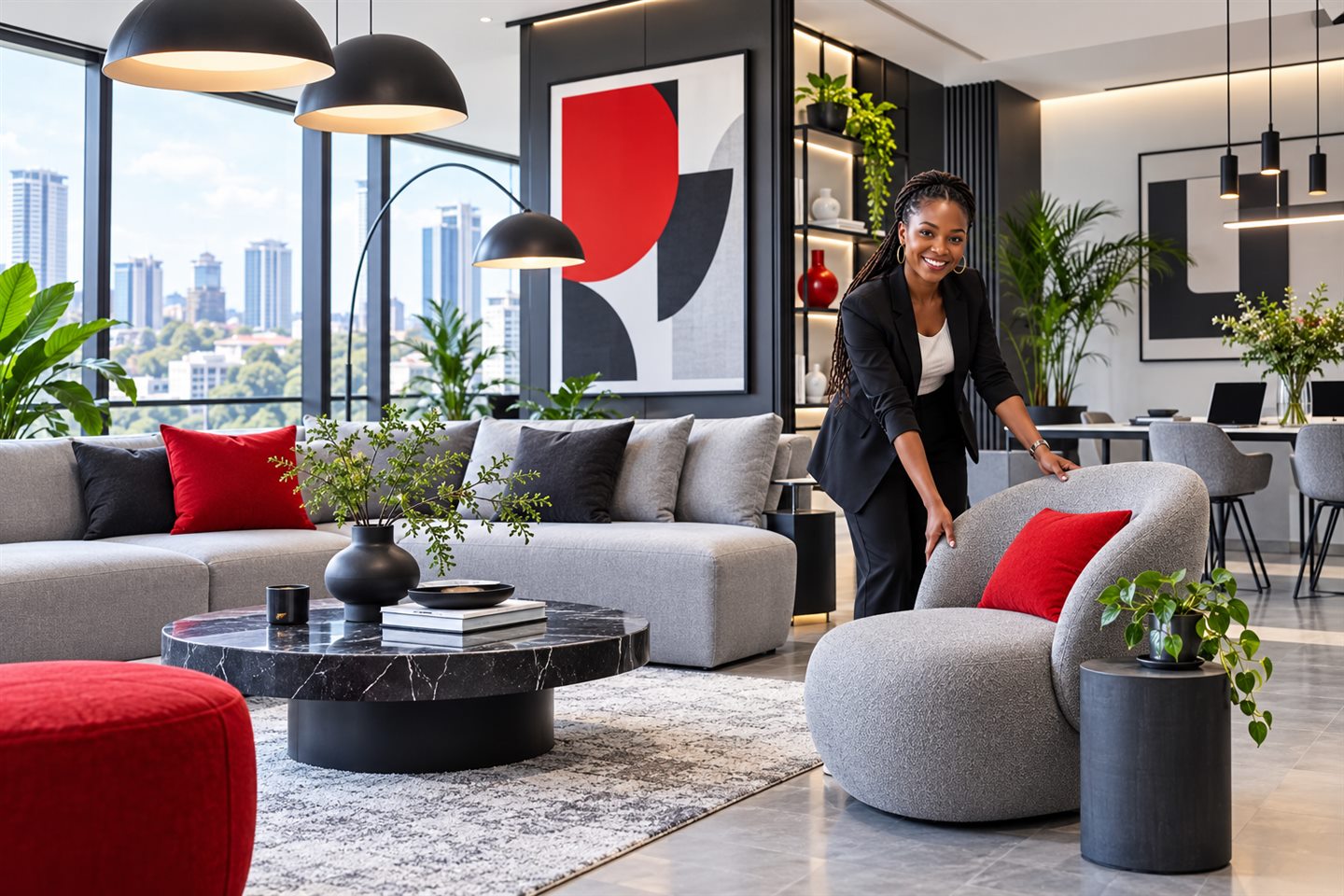
A trend can give you a starting idea, but your room should still work after the photograph is taken. If you are considering a warm palette, a flexible layout or layered lighting, test each choice against the people who use the space, the available light, your budget and the maintenance you can manage.
Test material ideas in the real room
Timber tones, textured fabrics and natural-looking finishes can make a room feel warmer. Ask for samples and check them in daylight and at night. Consider cleaning, wear, replacement and how the material works with what you already own before ordering.
Use flexible layouts only where you need them
A desk in a bedroom, a movable dining table or storage that doubles as seating can help a room support more than one activity. Measure the furniture and walk the routes before buying. A multi-use item is helpful only if it stays comfortable and accessible for each task.
Layer light around the activity
Plan general light, task light and softer evening light around how you cook, read, work or meet clients. Check glare, sockets, switches and controls on the layout. Ask a qualified professional to handle any electrical changes.
Choose ideas that will last for you
You do not need to copy every new look. Keep expensive fixed elements useful and bring a changing style into paint, textiles or accessories that are easier to replace. Share a budget and the work you want the interior to do before a designer recommends finishes.
For a practical planning checklist, read how to find an interior designer in Nairobi and explore available IDAK profiles.