
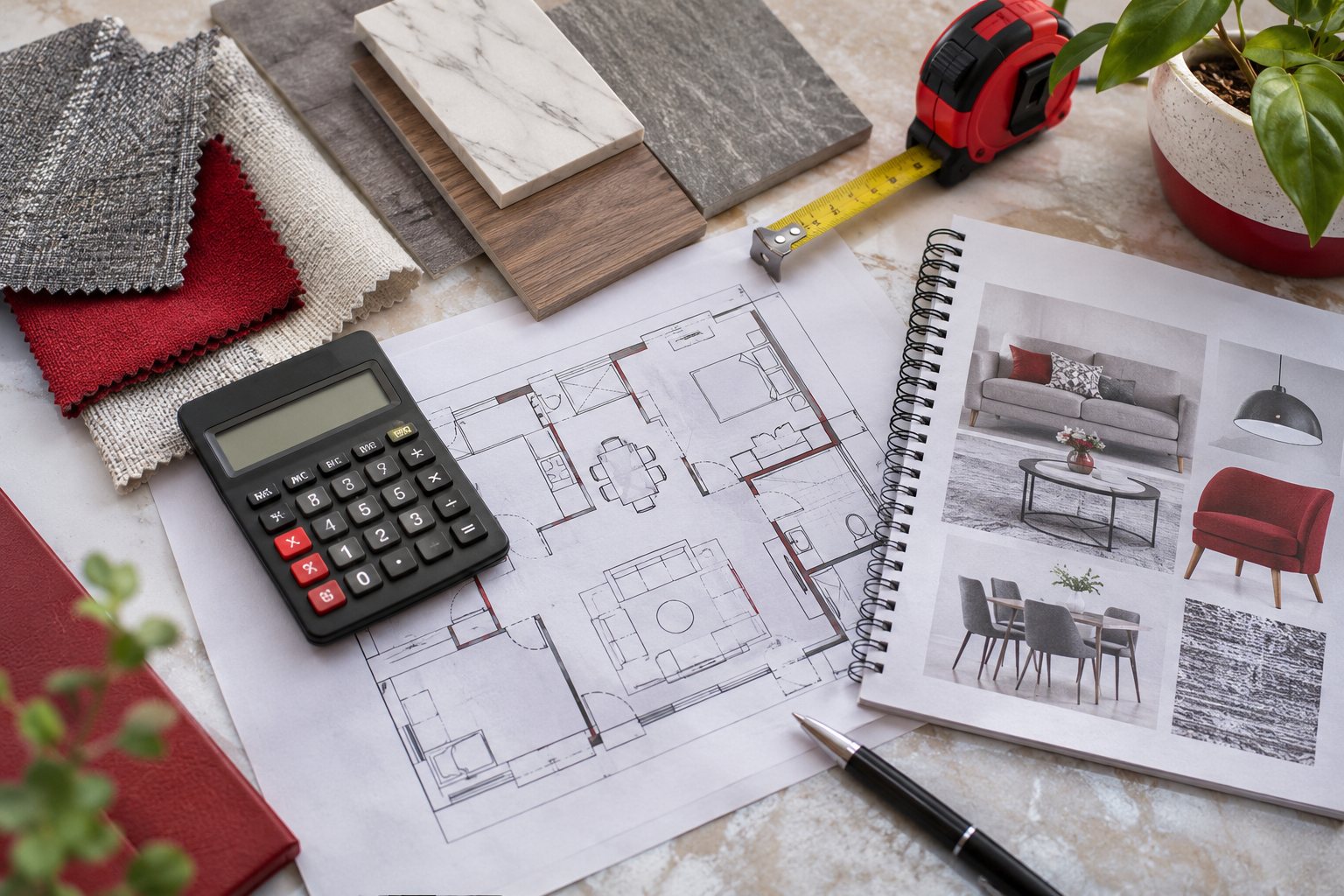
When you ask about the cost of interior design in Kenya, decide whether you mean the designer’s fee or the entire bill for finishing the space.
1. Start with a room-by-room scope
List what must change, what you will keep and what can wait. A furnished apartment needing advice on layout will have a different budget from an empty apartment needing joinery, appliances, furniture and labour.
2. Build the budget in categories
Keep the designer’s professional fee separate from furniture, cabinetry, appliances, materials, labour, delivery, installation and specialist work. For illustration, 60 m² at a published starting rate of KSh 1,500/m² equals KSh 90,000 for design; at KSh 2,500/m² it equals KSh 150,000. Apiyo Design Studio publishes those starting rates for different service levels and states that minimum fees apply. These calculations are not a complete apartment budget. Ask for a room-by-room BOQ and supplier quotations before comparing a turnkey total.
3. Make room for uncertainty
Hidden conditions, revisions, availability and delivery can change costs. Set a contingency appropriate to the risk with your project team, and agree who can authorise its use. A contingency is not a quote or a reason to begin unapproved work.
4. Compare scenarios before committing
For example, price a layout and essential furniture first, then a second phase for custom storage and decorative items. Compare actual supplier quotations rather than assuming that one finish or brand will always be cheaper. Reusing a sound item may free funds for a higher-priority need.
5. Keep a live record
Track the original allowance, approved quote, payments and outstanding balance for each category. Record decisions in writing so the designer, contractor and client work from the same information.
Use the IDAK directory to find a professional who can advise on your scope, and read how to compare design quotations.
Related guide: How Much Does an Interior Designer Cost in Kenya?.