
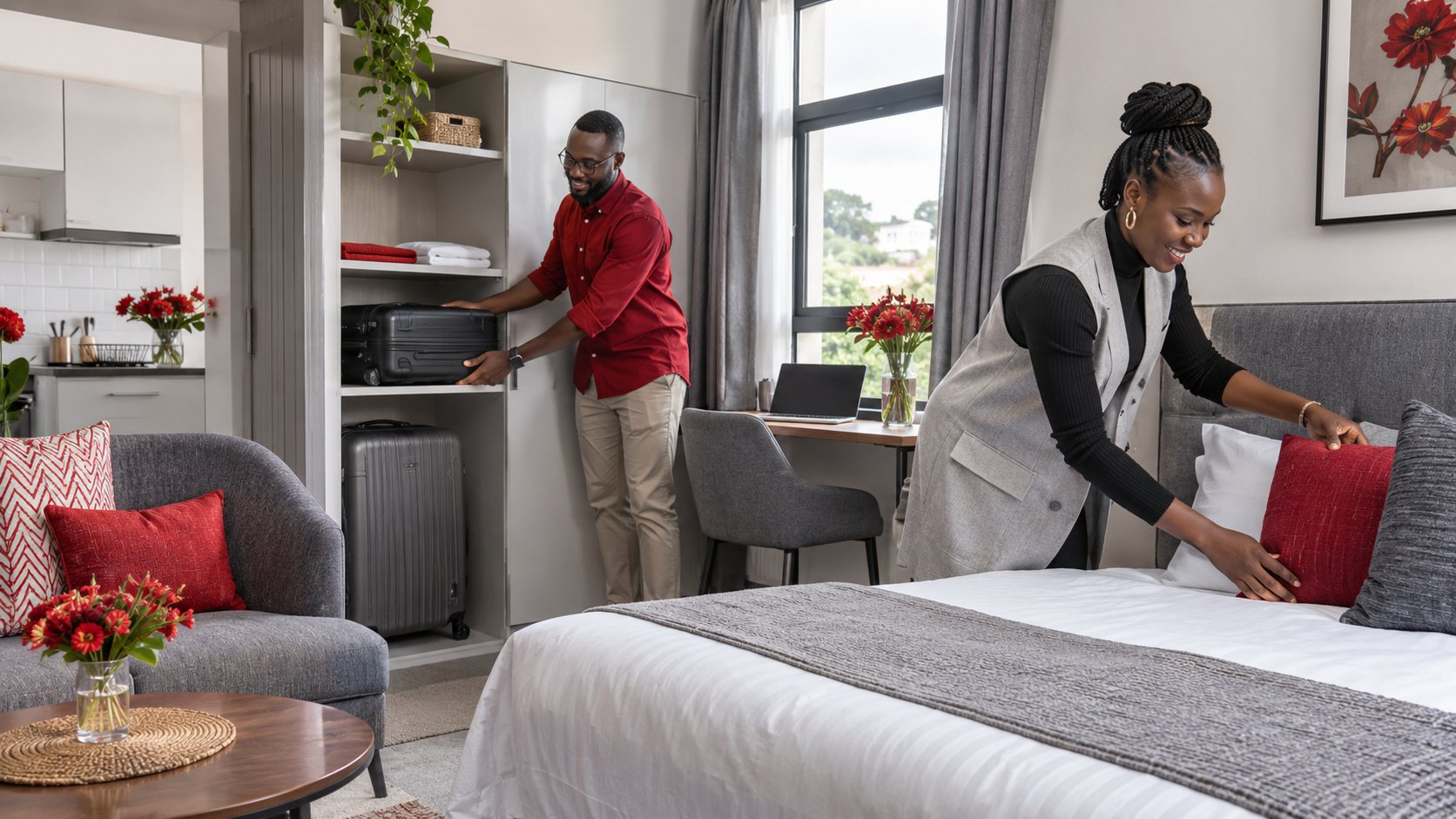
If you’re furnishing an Airbnb in Nairobi, design for the guest who arrives late, cannot find a socket and has nowhere to put a suitcase.
Start with the operating plan
Describe the intended guests, occupancy, length of stay and how the property will be managed. Check the applicable lease, building rules and any relevant local requirements before assuming a unit may be used for short stays. Tell the designer who will clean the space, store supplies and replace damaged items.
Plan for use and maintenance
Specify guest capacity, luggage storage, device charging, task lighting, a simple place to eat or work, and a lockable store for linen and cleaning supplies. Choose finishes a cleaner can maintain and replacement items you can source locally. Check your lease and building rules before assuming short stays are allowed; a well-designed room does not guarantee bookings or income.
Agree how the project will be delivered
Ask whether the fee includes a layout, furniture schedule, supplier quotations, purchasing, installation and styling. Separate design and management fees from products, delivery, labour and photography. Record who owns purchasing decisions and how substitutes or budget changes are approved.
A well-designed property cannot guarantee bookings or earnings. Compare proposals based on the needs and budget you control, and assess the business case separately.
Use the IDAK directory to explore available designers and ask about relevant short-stay or residential work. The Airbnb design guide offers more ideas for a guest-ready brief.
Related guide: Affordable Interior Designers in Nairobi: How to Set a Useful Budget.